Why Abrasive Waterjet Is Perfect for Next Gen Advanced Materials
Tuesday, April 21, 2026
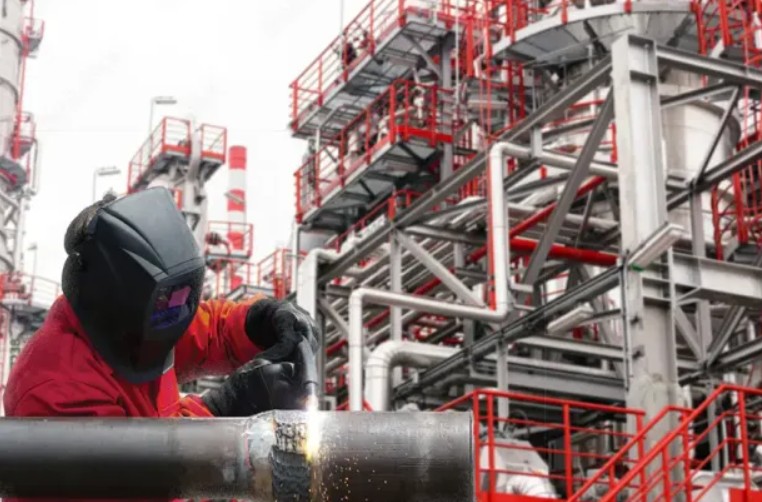
As data centers, power grids, and energy generation systems expand to meet rising demand, the materials behind that infrastructure are changing just as quickly. Engineers are increasingly specifying advanced composites, ceramic matrix materials, specialty alloys, and thermally optimized components to improve efficiency, durability, and long-term performance.
These materials deliver meaningful gains, but they also push the limits of traditional fabrication methods. Many are difficult to cut, sensitive to heat, or prone to mechanical damage during machining. That is where abrasive waterjet cutting continues to prove its value, not as a niche process, but as a practical manufacturing tool that adapts as materials evolve. Companies like OMAX have built their waterjet platforms specifically to support this shift toward advanced and non-traditional materials across industrial applications.
Advanced materials require gentler, more flexible cutting
Across data center cooling systems, grid modernization projects, and next generation energy infrastructure, manufacturers are adopting materials engineered to handle extreme heat, corrosion, electrical loads, and long duty cycles.
Common examples include composite core conductors used in power transmission, fiber reinforced polymers and ceramic matrix composites, high purity aluminum and copper selected for electrical and thermal efficiency, and ceramic filled or polymer-based components used for cooling, insulation, and structural support. Many of these materials fall outside what traditional thermal or mechanical cutting methods handle well, which is one reason abrasive waterjet is increasingly specified for advanced material fabrication. A broad overview of compatible materials is outlined in OMAX's guide to what a waterjet can cut.
Many of these materials are layered, anisotropic, or chemically sensitive. That makes them poor candidates for thermal cutting processes, which can introduce heat affected zones, distortion, or micro cracking that compromise performance. Research into grid resilience and advanced cooling technology consistently shows increased reliance on non-metallic and composite materials to improve efficiency and service life.
Abrasive waterjet cutting avoids these issues by removing material mechanically, without introducing heat. Modern abrasive waterjet systems, including those detailed at OMAX.com, are designed to deliver controlled cutting performance across a broad range of materials and thicknesses, making them well suited for advanced infrastructure components.
No heat affected zone matters for performance materials
One of the most important advantages of abrasive waterjet cutting is that it is a true cold cutting process. Unlike laser, plasma, or oxyfuel cutting, waterjet produces no thermal distortion, no recast layer, and no micro cracking at the cut edge.
This is especially important when working with composite and polymer matrix materials, where heat can degrade resins, weaken fiber bonding, or cause delamination. Ceramic matrix composites also benefit from cold cutting, as localized heating can introduce stress fractures or surface damage that are difficult to detect during inspection.
In data centers and power infrastructure, high conductivity copper and aluminum are widely used in power distribution systems, busbars, and heat exchangers. Even small heat affected zones can reduce conductivity, impact flatness, or complicate downstream assembly. By eliminating heat entirely, abrasive waterjet cutting helps maintain material performance and often reduces scrap or secondary operations caused by thermal damage.
One process that handles mixed material systems
As infrastructure systems become more integrated, mixed material assemblies are increasingly common. It is no longer unusual to see composite panels paired with aluminum frames, ceramic enhanced insulation located next to stainless or copper components, or advanced polymer plumbing integrated into cooling and energy systems.
Abrasive waterjet technology can cut all these materials, often on the same machine and with little to no setup change. This flexibility supports faster prototyping, simpler production planning, and lower capital investment compared to maintaining separate cutting platforms for different materials.
Many manufacturers rely on abrasive waterjet specifically because it enables cutting metals, composites, plastics, and ceramics on a single platform. OMAX highlights this versatility across a wide range of materials, particularly where tight tolerances and complex assemblies are required.
Precision without inducing stress
Modern grid and energy components are designed with tight tolerances to improve efficiency, reduce losses, and simplify installation. Advanced transmission conductors, grid enhancing technologies, and structural assemblies rely on accurate profiles and consistent edge quality to perform as intended.
Abrasive waterjet cutting applies minimal cutting forces and introduces no thermal or mechanical stress into the material. This helps maintain dimensional stability, even when cutting thick, hard, or layered materials. Clean edges and consistent kerf quality make it well suited for structural composites, laminated materials, gaskets, insulation components, and complex geometries.
For applications where flatness, alignment, and repeatability matter, waterjet delivers precision without the side effects that often come with more aggressive cutting methods.
Supporting sustainability goals in advanced manufacturing
Sustainability is another driver behind advanced material adoption, particularly in data centers and power infrastructure. Copper and aluminum are widely used for their recyclability, while composites enable lighter structures that reduce operational energy use and extend service life.
Abrasive waterjet cutting aligns well with these sustainability goals. It produces no hazardous fumes or dross and reduces reliance on secondary finishing processes. High precision cutting also enables tighter nesting, which improves material utilization and reduces waste.
For manufacturers investing in energy efficiency, cleaner facilities, and long-term environmental performance, waterjet supports responsible manufacturing without sacrificing capability or throughput.
A practical advantage as materials continue to evolve
The materials used in data centers, power grids, and energy generation systems will continue to change as performance requirements increase. Manufacturing processes must keep pace without introducing risk, complexity, or excessive cost.
Abrasive waterjet cutting's ability to handle new, difficult to machine materials without heat or added stress makes it a dependable long-term solution. It adapts as materials change, rather than forcing manufacturers to choose between performance and manufacturability.
For shops working with advanced materials today and preparing for what comes next, abrasive waterjet remains one of the most adaptable and future ready tools on the shop floor.