Reducing Splashing in Waterjet Cutting: Practical Strategies for Cleaner, Safer Operations
While today’s waterjets can be quite clean in operation, if you use a waterjet long enough, you will experience some sort of splashing. It shows up when the jet interacts with slats, when pierces break the surface, or when part geometry redirects the stream in unpredictable ways.
Cutting underwater is the most effective way to control splash. It reduces noise, captures debris, and limits spray at the source. But in many shops, full underwater cutting is not practical for every job. That is where simple, targeted solutions can make a measurable difference.
Where Splash Comes From
Understanding what drives splash makes it easier to control:
-
Jet striking slats
-
Piercing above water level
-
Changing part geometry redirecting the stream
-
Inconsistent material support or spacing
Two Practical Ways to Reduce Splash
There are several low-effort ways to reduce spray without changing your process.
1. Control Splash at the Source with a Nozzle Guard
Piercing is one of the most common causes of splash. The initial breakthrough pushes water and abrasive upward, often outside the immediate cutting area. Piercing between slats can reduce the water spray.
A nozzle splash guard, or muff, addresses this directly. It fits over the nozzle keeping spray localized and preventing it from reaching operators or surrounding equipment.
2. Extend Containment with a Splash Shield Kit
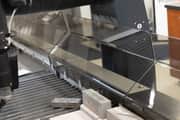
For a more integrated approach, splash shield kits provide perimeter control. These clear, panels mount around the tank and effectively extend the tank walls upward.
Because they are segmented, operators can remove only the sections needed for loading or part retrieval, then quickly reinstall them before cutting resumes. This keeps workflows flexible while maintaining protection during operation.
These kits are available across MAXIEM and OptiMAX platforms, scaling easily from smaller systems like the MAXIEM 1515X up to larger formats such as the OptiMAX 80X or MAXIEM 3060X.
Safety and Ergonomics Considerations
Splash control is not just about keeping things clean. It directly impacts operator safety and day-to-day comfort.
Reducing airborne mist and stray spray helps:
-
Improve visibility during cutting
-
Lower slip hazards around the machine
-
Minimize exposure to abrasive slurry
-
Reduce the need for frequent cleanup
From an ergonomic standpoint, operators benefit from a more predictable, controlled environment. Less time spent wiping surfaces, repositioning materials, or avoiding spray translates into smoother workflows and less physical strain.
Over time, these small improvements add up to a better overall experience on the shop floor. Cleaner work areas, fewer interruptions, and more consistent conditions support both productivity and employee satisfaction.
Putting It All Together
No single solution eliminates splash in every situation. But combining these approaches can significantly reduces it:
-
Use waterjet brick to absorb impact
-
Add a nozzle splash guard for piercing
-
Install splash shields for perimeter containment
-
Cut underwater whenever possible
Together, these strategies create a cleaner, more controlled cutting environment without adding complexity to your workflow.
Frequently Asked Questions
Do I need to use all of these methods at once?
No. Even one or two changes can make a noticeable difference. Most shops start with setup adjustments and add hardware solutions over time.
Is underwater cutting always required to control splash?
It is the most effective option, but not always necessary. Combining path optimization, splash guards, and shields can achieve strong results even when cutting above water.
Will splash shields slow down loading and unloading?
No. The segmented design allows operators to remove only the sections they need, keeping access quick and flexible.
Are splash shields only for large machines?
No. They are designed to scale across different system sizes, from compact machines to large-format tables.
Does reducing splash actually improve safety?
Yes. Less spray means better visibility, fewer slip hazards, and reduced exposure to water and abrasive, all of which contribute to a safer workspace.