Precision Waterjet Cutting for Stone, Marble, and Granite
Best Practices for Better Yield and Cleaner Edges
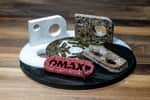
Stone shops do not get many second chances with marble or granite. One bad pierce, one unstable section of slab, or one off setup can turn good material into expensive scrap. Abrasive waterjet cutting helps reduce that risk because it cuts detailed shapes, tight inside corners, inlays, and finished edges without heat or heavy sideways cutting force.
The process still rewards good planning. Material condition, slab support, piercing strategy, nesting, taper control, and software settings all affect whether a job produces profitable parts or expensive scrap. Marble, granite, and other natural stone also behave differently. On an OMAX abrasive waterjet, the best setup is the one built around the slab in front of you, not the one that worked last week.
Success Starts Before the First Cut
The best cuts in stone often happen before cutting even starts. Before loading a program, inspect the slab for thickness variation, warping, visible fractures, voids, repairs, and veining. Natural stone is rarely uniform, and a visually small defect can become a break point once the jet reaches it.
Next, review your CAD drawing. Identify the visible faces, mating edges, minimum features, inside corners, and areas where a pierce mark cannot be tolerated. Define the acceptable edge finish before choosing a cut quality. A decorative inlay needs a different plan than a rough blank that will be finished by hand.
For expensive material, a representative test cut is cheap insurance. Use a remnant or noncritical area from the same slab when possible. On an OMAX system, the test lets you verify edge appearance, kerf, fit, pierce behavior, and taper before committing the best section of the stone.
Marble and Granite Are Not the Same Job
One of the easiest ways to create trouble is to treat every stone slab alike. Marble is often softer and more sensitive around veins. Density and mineral composition can change from slab to slab, so an interior pierce or narrow feature that worked cleanly on one piece may chip on the next.
Granite is harder, but hardness does not make it predictable. Internal fractures can stay hidden until the cut opens them. Lower-edge striations may also become more visible when the cutting speed is too aggressive. Full support and a test cut matter just as much as they do with marble.
Mixed natural stone brings another layer of variation. Veining, filled voids, thickness changes, and surface flatness can all shift across one slab. Map questionable areas before nesting and place them in scrap whenever the design allows. The machine can follow the programmed path precisely, but it cannot make an unstable section of stone behave like a sound one.
Support the Slab Like the Finished Part Depends on It
An OMAX waterjet does not add side pressure like a saw, but the slab still needs full and even support. Unsupported overhangs can vibrate, bruise, or crack as the jet moves through the material. This is especially important near brittle veining, narrow features, and areas that become isolated late in the cut.
Stable fixturing is what turns machine positioning into part accuracy. If the slab shifts, rocks, or flexes, the final part can be wrong even when the nozzle follows the toolpath exactly. Keep clamps and fixtures clear of pierce points, lead-ins, and cut paths. Protect polished or visible surfaces during loading and unloading, not just during cutting.
Flatness affects standoff as well. A warped slab changes the distance between the nozzle and surface across the table. On compatible OMAX systems, the Collision Sensing Terrain Follower adjusts to surface variation to help maintain a consistent standoff. That consistency supports more repeatable edge quality across an imperfect slab.
Protect the Stone with the Right Piercing Strategy
The pierce is one of the most vulnerable moments in a stone job. A full-pressure interior pierce can chip the surface or start a fracture, especially in marble. Low-pressure piercing reduces that initial shock and gives the jet a controlled way into the material.
Whenever possible, place the pierce in scrap and use a lead-in to reach the finished geometry. That gives the stream time to stabilize before it touches the part edge. Lead-outs can provide the same protection at the end of the cut. IntelliMAX Software can apply lead-ins and lead-outs during toolpath creation, reducing the amount of manual cleanup required in CAD.
Control Taper for Inlays and Tight-Fitting Parts
Every abrasive waterjet cut has some natural taper. For a rough blank or a part with a generous gap, that may not matter. For a stone inlay, medallion, miter, or mating assembly, it can be the difference between a tight seam and a visible shadow line.
Taper compensation tilts the cutting head to counter the natural V-shaped profile of the jet. OMAX TiltaJET can move taper to the scrap side while IntelliMAX adjusts cutting behavior based on the part geometry, material, and thickness. The result is a squarer finished edge with less hand fitting.
Do not assume the kerf stays fixed through a long cut time. Mixing tube wear can widen it over time. Measure the actual kerf, maintain the cutting components, and update offsets when needed. On matching parts, dry-fit the first set before running the full nest. A few minutes at the inspection table can prevent hours of rework.
Use Software to Remove Guesswork
IntelliMAX Software connects drawing, toolpath, and machine control. In LAYOUT, the operator prepares geometry, selects cut quality, and defines the toolpath. MAKE controls machine motion and cutting operation.
For stone work, the value is consistency. Accurate material and thickness information gives the OMAX cutting model a better foundation for speed, corner behavior, and compensation. Once a test cut is approved, document the setup so the next run starts from a known baseline instead of another round of guesswork.
Common Stone Cutting Mistakes to Avoid
Most stone rework comes back to a short list of preventable decisions:
-
Leaving sections of the slab unsupported. Full, even support limits vibration and protects narrow or brittle areas.
-
Skipping taper compensation on inlays and mating parts. Natural taper can create visible gaps even when the top dimensions look correct.
-
Reusing settings without checking the next slab. Material source, thickness, density, veining, and repairs can change the result.
-
Ignoring kerf changes as cutting components wear. Measure the first part and maintain offsets throughout production.
-
Running the complete nest before inspecting a part. Verify dimensions, holes, minimum features, and edge appearance early.
Build a Repeatable Stone-Cutting Process
A repeatable process gives every operator the same starting point and makes improvement easier to track. Use this checklist for each stone job:
1. Identify the stone type, slab thickness, visible face, and known defects.
2. Define edge appearance, dimensional requirements, and mating features.
3. Nest for yield while respecting grain, veining, weak areas, and remnant value.
4. Provide full support and confirm that clamps are clear of the toolpath.
5. Place pierces in scrap and use low-pressure piercing where the stone requires it.
6. Select cut quality and taper control based on the finished application.
7. Run and approve a representative test piece.
8. Measure kerf and inspect the first production part against the drawing.
9. Dry-fit inlays, miters, and mating assemblies before completing the nest.
10. Label usable remnants and record the approved setup for future work.
The final step is to make the process fit the work your shop actually does. Evaluate slab sizes, part geometry, finish expectations, and production volume with an OMAX applications specialist. The right waterjet, cutting head, and IntelliMAX workflow should protect expensive material while helping operators produce repeatable parts with less manual adjustment.
Frequently Asked Questions
Can a waterjet cut marble and granite?
Yes. OMAX abrasive waterjet systems use garnet carried in a high-pressure water stream to cut marble, granite, engineered stone, tile, and many other hard materials. The process does not create a heat-affected zone and applies little sideways cutting force.
How do I reduce chipping when piercing stone?
Use low-pressure piercing for sensitive interior starts, place the pierce in scrap, and connect it to the finished geometry with a lead-in. Full and even slab support also helps prevent vibration near the pierce.
Does waterjet-cut stone need finishing?
It depends on the required appearance and fit. A properly selected cut quality can produce a clean edge, but visible architectural work may still receive polishing or other finishing. Tight inlays and mating parts benefit from taper compensation and a test fit before production continues.
Why should I test cut the actual slab?
Natural stone varies in density, thickness, veining, repairs, and internal condition. A representative test cut confirms edge quality, kerf, piercing behavior, and fit using the material that will actually become the finished part.