Why Near Net Waterjet Cutting Matters More Than Ever for U.S. Manufacturers
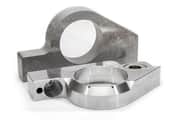
U.S. manufacturers are navigating a challenging mix of economic pressure, labor constraints, and rising material costs. Across aerospace, defense, energy, and industrial fabrication, the mandate is clear: produce more with less waste, less risk, and tighter control of upstream processes.
Near net cutting with abrasive waterjet technology has become a critical aspect in that equation. Not as a replacement for other machine tools, but to protect capital investments, maximize material utilization, and keep downstream equipment running at full productivity.
In many operations, the greatest opportunity for improvement is not found at the end of the process, but at the very beginning. How material enters the workflow has a direct and lasting impact on cost, throughput, and schedule predictability.
The Economic Reality Facing U.S. Manufacturing
Material prices remain volatile. Skilled labor is harder to find. Lead times and supply chains are under constant strain. At the same time, customers expect faster delivery, tighter tolerances, and consistent quality.
For many manufacturers, the bottleneck is not finishing or final machining, but how parts enter the workflow. When parts start as oversized blanks, inefficiencies are baked into the process from the start.
That excess material consumes machine time, tooling life, energy, and labor before any value‑added work begins. Roughing operations tie up high‑value CNC equipment and introduce variability that ripples through downstream processes.
Near net cutting changes that equation by reshaping the upstream process. By starting closer to final geometry, manufacturers reduce waste before it ever becomes a problem, improving cost control and production predictability.
Near Net Waterjet Cutting: Using the right tools to better your workflow
Abrasive waterjet cutting excels at producing near net shapes that closely match final geometry before machining begins. By removing the bulk of material early, manufacturers dramatically reduce roughing time on CNC mills, lathes, and other high‑value equipment.
This is where the economic value compounds.
Less time spent roughing means more time spent machining features that actually matter. Tooling lasts longer. Setups become more consistent. Schedules become easier to maintain.
The benefits add up quickly:
-
Less spindle time wasted on roughing
-
Reduced tooling wear and replacement costs
-
Faster transition to value‑added finishing
- More predictable cycle times
Material Utilization Drives Margin Protection
Waterjet’s narrow kerf and precision pathing enable tighter nesting and better sheet utilization. That matters when cutting expensive plate, specialty alloys, or composite laminates where material cost directly impacts margins.
Near net blanks reduce scrap while maintaining flexibility. Parts can be nested more efficiently, and material usage can be optimized without sacrificing geometry or downstream performance.
Just as important, design changes can be accommodated without retooling or scrapping fixtures. That flexibility is especially valuable in low‑volume or high‑mix production environments, where variation is the norm and rigidity is costly.
By improving material utilization upstream, manufacturers protect margins downstream.
Cold Cutting Without Compromise
Unlike thermal processes, abrasive waterjet cutting introduces no heat affected zone and no metallurgical distortion. Parts arrive at downstream operations ready for precision machining or welding.
This becomes increasingly important as manufacturers work with:
-
Carbon fiber and composite structures
-
Laminated and layered materials
-
Mixed material assemblies
- Specialty metals sensitive to heat input
Thermal distortion, microcracking, or changes in material properties create downstream problems that are difficult and expensive to correct. Waterjet eliminates those risks by removing material mechanically rather than thermally.
The ability to cut nearly any material with a single process also simplifies routing decisions. Parts do not need to move between multiple cutting technologies based on material type. That reduces handling, queuing, and the risk of damage or delay.
Keeping Capital Equipment at Maximum Output
CNC machines are among the most expensive assets on the shop floor. Their profitability depends on uptime and efficient use.
When those machines spend excessive time roughing, their value is diluted. Near net cutting shifts that work upstream, allowing CNC equipment to focus on finishing operations where precision matter most.
By shifting rough cutting to waterjet systems:
-
CNC machines spend more time finishing, not hogging
-
Programming becomes more consistent and repeatable
-
Bottlenecks caused by roughing operations are reduced
Near net cutting is not about speed alone. It is about protecting throughput where it matters most and ensuring that high‑value equipment is used efficiently.
Ease of Use Matters in a Tight Labor Market
Labor shortages are not theoretical, they are daily operational constraints for manufacturers across the U.S. It’s just a matter of the times we live in. More people are retiring and then reentering the work force and less people want to be machine operators.
Modern waterjet systems are designed to reduce operator burden through software‑driven cutting models, automated parameter control, and intuitive workflows. This allows shops to maintain productivity even as experienced labor becomes harder to replace.
Operators can transition between materials with minimal setup. Cutting parameters are applied automatically. In many cases, a single operator can manage multiple machines simultaneously.
That flexibility keeps production moving even when staffing is stretched thin and reduces reliance on specialized tribal knowledge that is difficult to scale.
The Bigger Picture: Why OMAX Waterjet Enables Manufacturing Resilience
Near‑net waterjet cutting is not just a process decision. With OMAX abrasive waterjet systems, it becomes a practical strategy for building more resilient, efficient manufacturing operations.
By enabling precise near‑net cutting without a heat‑affected zone, OMAX waterjet systems help manufacturers reduce material waste, stabilize upstream workflows, and protect downstream capital equipment. Parts start closer to final shape and move through machining and fabrication with fewer interruptions and less rework.
OMAX waterjet systems are designed to support this approach at scale. Software‑driven cutting models, intuitive workflows, and the ability to cut nearly any material on a single platform allow manufacturers to adapt quickly as materials, designs, and production demands change. That flexibility is especially valuable in high‑mix, low‑volume environments where efficiency and responsiveness directly impact profitability.
In an environment where every dollar, hour, and pound of material counts, OMAX waterjet cutting helps manufacturers control what happens at the very start of the process. By starting closer to final shape and removing inefficiency before it reaches the shop floor, waterjet technology strengthens throughput, improves predictability, and keeps production moving forward with confidence.
FAQs on Near-Net Cutting
Q: What is near net waterjet cutting?
A: Near net waterjet cutting is the process of cutting parts close to final shape before machining begins. Using abrasive waterjet technology, manufacturers remove excess material early, reducing roughing time on CNC mills and lathes. Parts enter downstream processes closer to finished geometry, which improves material utilization, shortens cycle times, and helps stabilize production schedules.
Q: How does near net waterjet cutting reduce manufacturing costs?
A: Near net waterjet cutting lowers costs by reducing material waste, cutting roughing time, and extending tooling life. By shifting bulk material removal upstream, high‑value CNC equipment can focus on precision finishing instead of hogging material. The result is better machine utilization, more predictable schedules, and lower total cost per part, especially when cutting expensive plate, alloys, or composites.
Q: Why is waterjet better than thermal cutting for near net shapes?
A: Abrasive waterjet cutting introduces no heat affected zone, distortion, or material property changes. Parts remain flat and stress‑free, which is critical for downstream machining, welding, or assembly. Waterjet can also cut nearly any material, including composites, laminates, and heat‑sensitive alloys, allowing manufacturers to standardize near net cutting across a wide range of applications.